- Remove the current class from the content27_link item as Webflows native current state will automatically be applied.
- To add interactions which automatically expand and collapse sections in the table of contents select the content27_h-trigger element, add an element trigger and select Mouse click (tap)
- For the 1st click select the custom animation Content 27 table of contents [Expand] and for the 2nd click select the custom animation Content 27 table of contents [Collapse].
- In the Trigger Settings, deselect all checkboxes other than Desktop and above. This disables the interaction on tablet and below to prevent bugs when scrolling.
By Dr. Ramses Alcaide, CEO and co-founder, Neurable
Today we're launching Neurable One. I've rewritten the first line of this post more times than I'd like to admit. So here it is. I'm proud of these headphones, and I can't wait to put them in your hands.
10 years in the making
Neurable started in 2015 as a spin-out from the Direct Brain Interface Lab at the University of Michigan. The question back then was simple to ask and hard to answer. Could you read brain activity outside a lab, on a device people would actually want to wear?
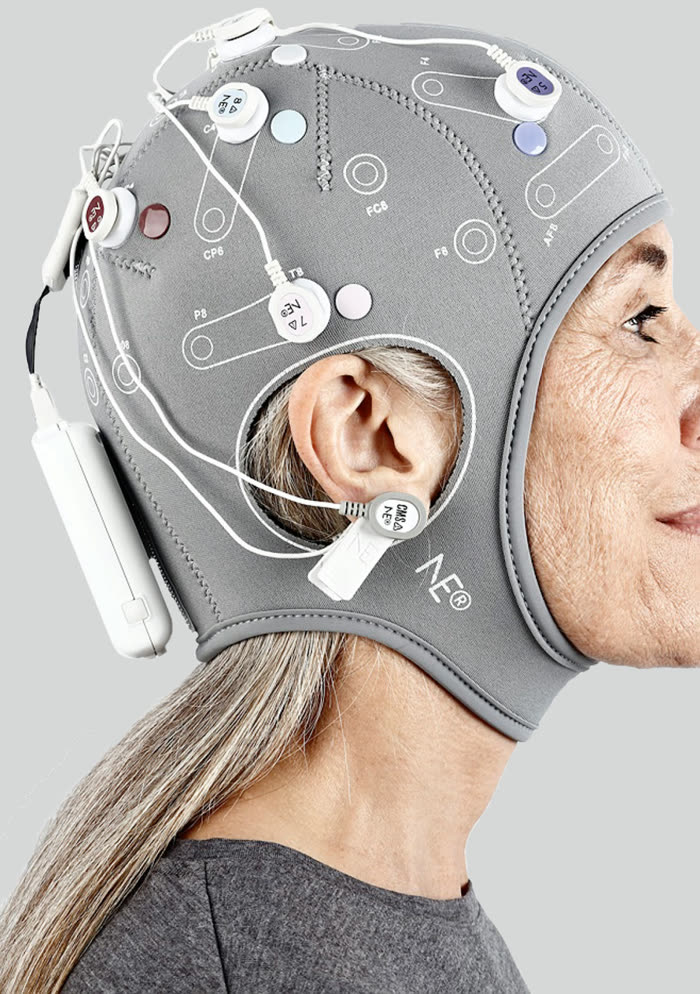
EEG has been around for about 100 years. EEG sensors pick up the small electrical signals your brain is already producing. But getting a usable signal has always meant a gel-filled cap and a trained operator. Someone also had to sit very still in a controlled room. Walk around, talk, or turn on the lights, and the signal falls apart.
So we spent a decade on the part nobody sees. Our team built signal processing and AI that clean out the electrical noise from everyday life. What's left is the brain signal. That work is behind more than 80 patents and 7 peer-reviewed papers. It's also been validated by the U.S. Army and the U.S. Air Force.
The first product we built ourselves
Here's the part that gets me the most excited. Our earlier products were built with partners. Neurable One is the first one we designed, built and are shipping ourselves.
That changes a lot. We control the sensors, so we get better readings. We control the device, so we can improve the AI inside it. And our development cycles are faster, which means we can get new things to you sooner.
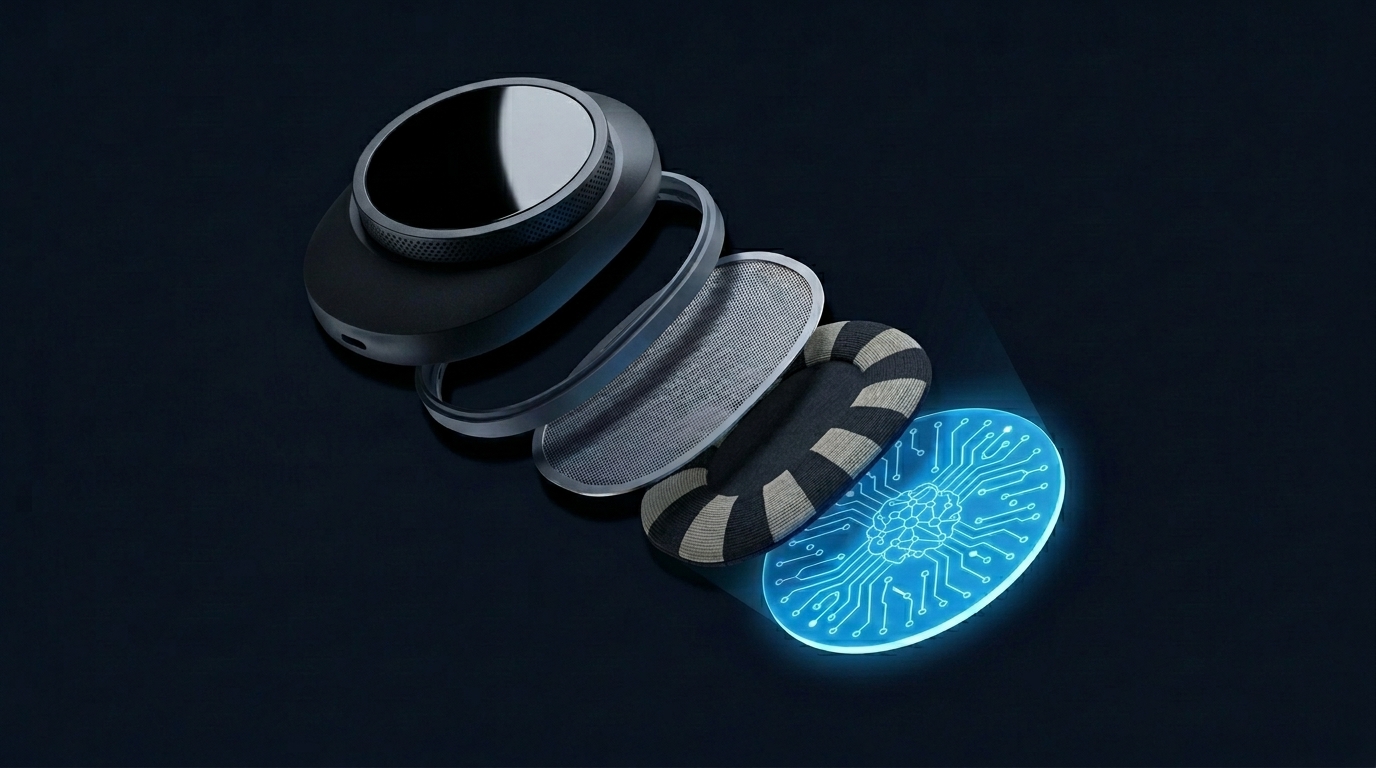
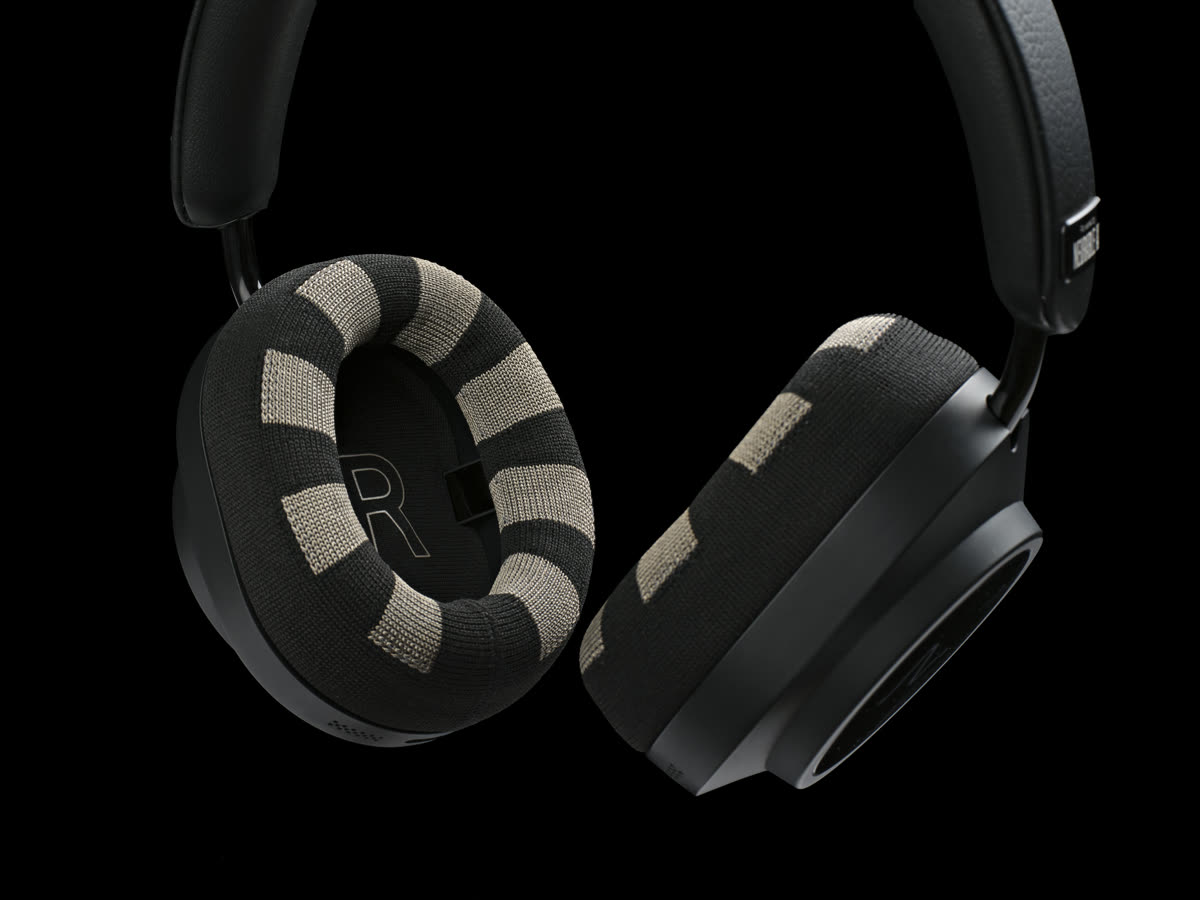
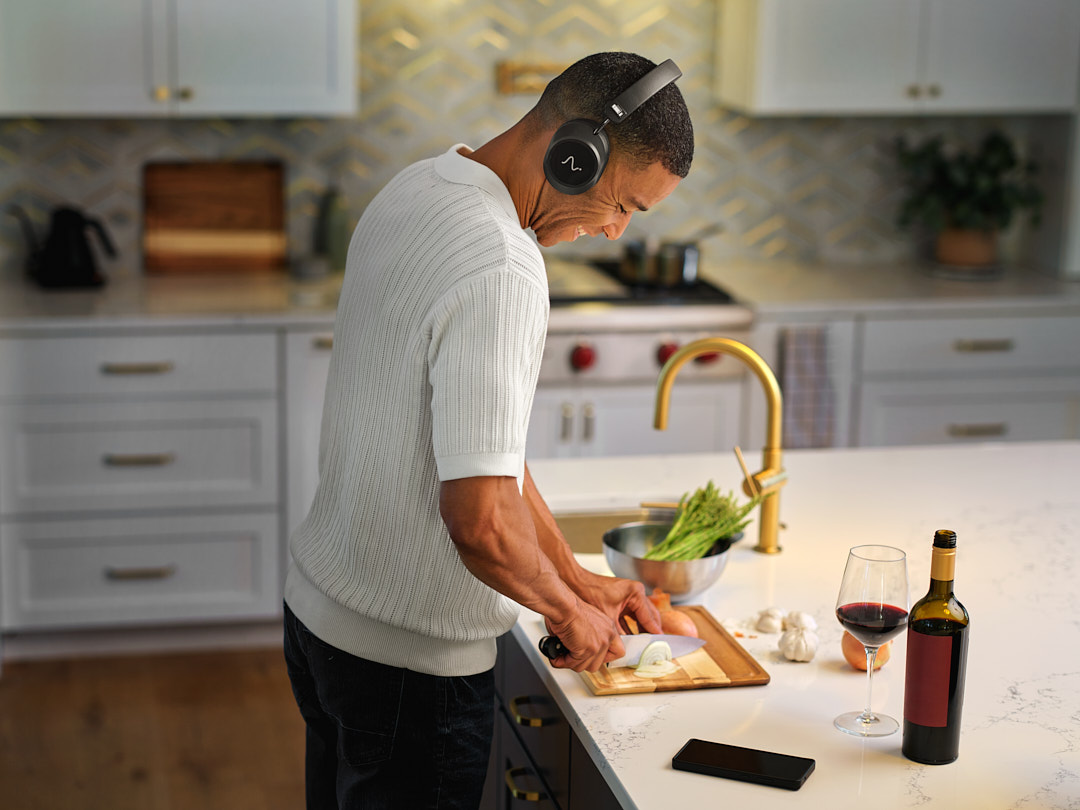
Neurable One has 12 EEG sensors woven into the ear pads. You can't see them as sensors, and that's the point. They look like the sand and black pattern on the cushions.
Great headphones first
Priorities matter here. If these weren't great headphones, nobody would wear them long enough for the brain data to matter.
So they're headphones first:
- 40 mm beryllium drivers
- Active noise cancelling for deep work, and ambient listening for in-person meetings
- 6 microphones
- 22 hours of audio (12 with EEG running)
- USB-C charging, where 15 minutes gives you 2 hours
You can close the app and just listen to music. They're good at that.
What the brain data gives you
The app runs one loop at three speeds.
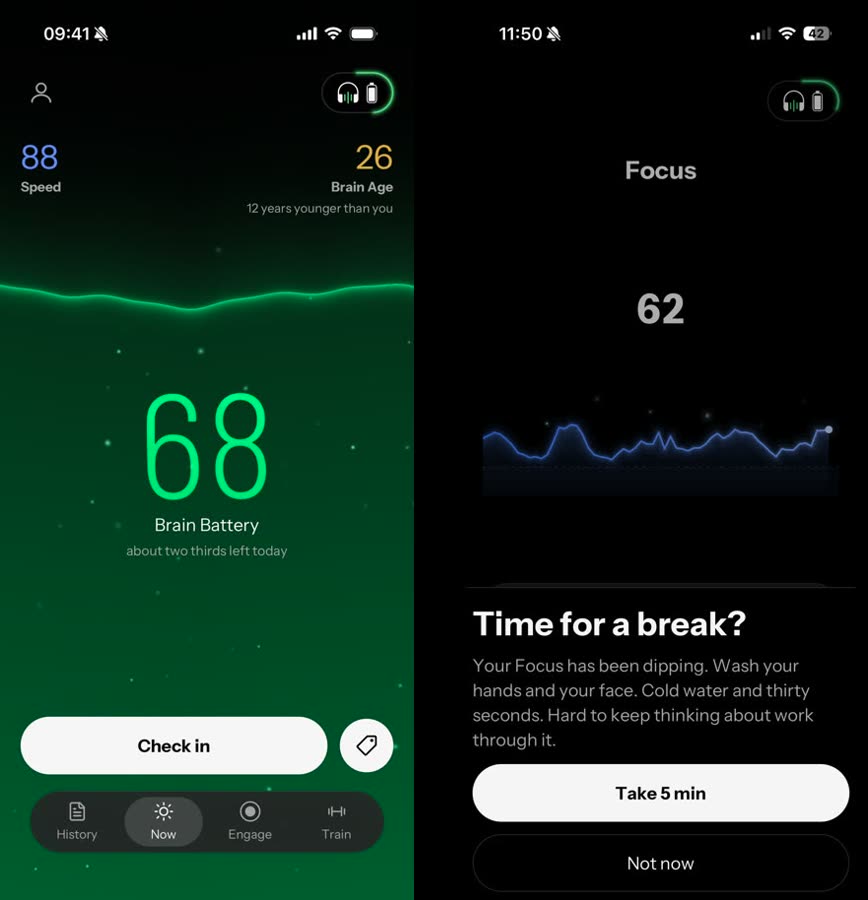
- Seconds. During a deep work session, you see your focus live. When it starts drifting, the audio shifts to nudge you back. When your signal says your brain is tiring, the app suggests a smart brain break.
- Hours. A 1-minute check-in, eyes closed. Do one before and after a change in your day, and see how it showed up in your brain.
- Weeks and months. Every time you wear them, you bank brain data. Weekly and monthly reports show what's been trending as your habits change.
There are 8 brain metrics in the app, and 2 of them are new. Brain Battery shows what you have left in reserve. Alpha Peak Frequency is your strongest resting rhythm. I think of it as the HRV for the brain. It's stable day to day and interesting over months.
What I learned wearing them
I've worn Neurable One every day while we built it. I start the morning with a check-in. When I sit down for deep work, I run a session. The rest of the day, they're my normal headphones.
The data told me something I didn't expect. I used to think I had to pick between getting more work done and looking after myself. Then I saw what my focus looked like after I actually took a break. For me, productivity and wellness turned out to be the same thing.
That's what I want for you. Neurable One shows you your own patterns, and you decide what to do with them.
What we're not claiming
EEG reads electrical activity at the surface. It doesn't read thoughts, words, images or mood. We measure signal patterns associated with attention, fatigue and effort, and we compare them against your own earlier readings.
Neurable One is a consumer wellness product. It is not a medical device and is not intended to diagnose, treat, or monitor any condition. We don't sell brain data, and we don't use it for advertising.
Your first week
If you get a pair, here's what I'd do:
- Check in every morning at the same time.
- Run at least one real session when you do deep work.
- Note what changed, so you can look back at it.
Brain Age and Alpha Peak Frequency show a number from day 1. But they need about a month of data to settle. Give it time. The longer record is where it gets interesting.
Brain data is next
Heart rate used to be something you measured at the doctor's office. Now it's on millions of people's wrists. I believe brain data is about to go the same way. I'm glad Neurable gets to help start that.
Neurable One is $499, and you can order it here. It's on schedule to begin shipping this November in the US.
Thank you to our team, our research partners, and everyone who's followed us for the last 10 years. This one's for you.
Ramses
2 Distraction Stroop Tasks experiment: The Stroop Effect (also known as cognitive interference) is a psychological phenomenon describing the difficulty people have naming a color when it's used to spell the name of a different color. During each trial of this experiment, we flashed the words “Red” or “Yellow” on a screen. Participants were asked to respond to the color of the words and ignore their meaning by pressing four keys on the keyboard –– “D”, “F”, “J”, and “K,” -- which were mapped to “Red,” “Green,” “Blue,” and “Yellow” colors, respectively. Trials in the Stroop task were categorized into congruent, when the text content matched the text color (e.g. Red), and incongruent, when the text content did not match the text color (e.g., Red). The incongruent case was counter-intuitive and more difficult. We expected to see lower accuracy, higher response times, and a drop in Alpha band power in incongruent trials. To mimic the chaotic distraction environment of in-person office life, we added an additional layer of complexity by floating the words on different visual backgrounds (a calm river, a roller coaster, a calm beach, and a busy marketplace). Both the behavioral and neural data we collected showed consistently different results in incongruent tasks, such as longer reaction times and lower Alpha waves, particularly when the words appeared on top of the marketplace background, the most distracting scene.
Interruption by Notification: It’s widely known that push notifications decrease focus level. In our three Interruption by Notification experiments, participants performed the Stroop Tasks, above, with and without push notifications, which consisted of a sound played at random time followed by a prompt to complete an activity. Our behavioral analysis and focus metrics showed that, on average, participants presented slower reaction times and were less accurate during blocks of time with distractions compared to those without them.