- Remove the current class from the content27_link item as Webflows native current state will automatically be applied.
- To add interactions which automatically expand and collapse sections in the table of contents select the content27_h-trigger element, add an element trigger and select Mouse click (tap)
- For the 1st click select the custom animation Content 27 table of contents [Expand] and for the 2nd click select the custom animation Content 27 table of contents [Collapse].
- In the Trigger Settings, deselect all checkboxes other than Desktop and above. This disables the interaction on tablet and below to prevent bugs when scrolling.
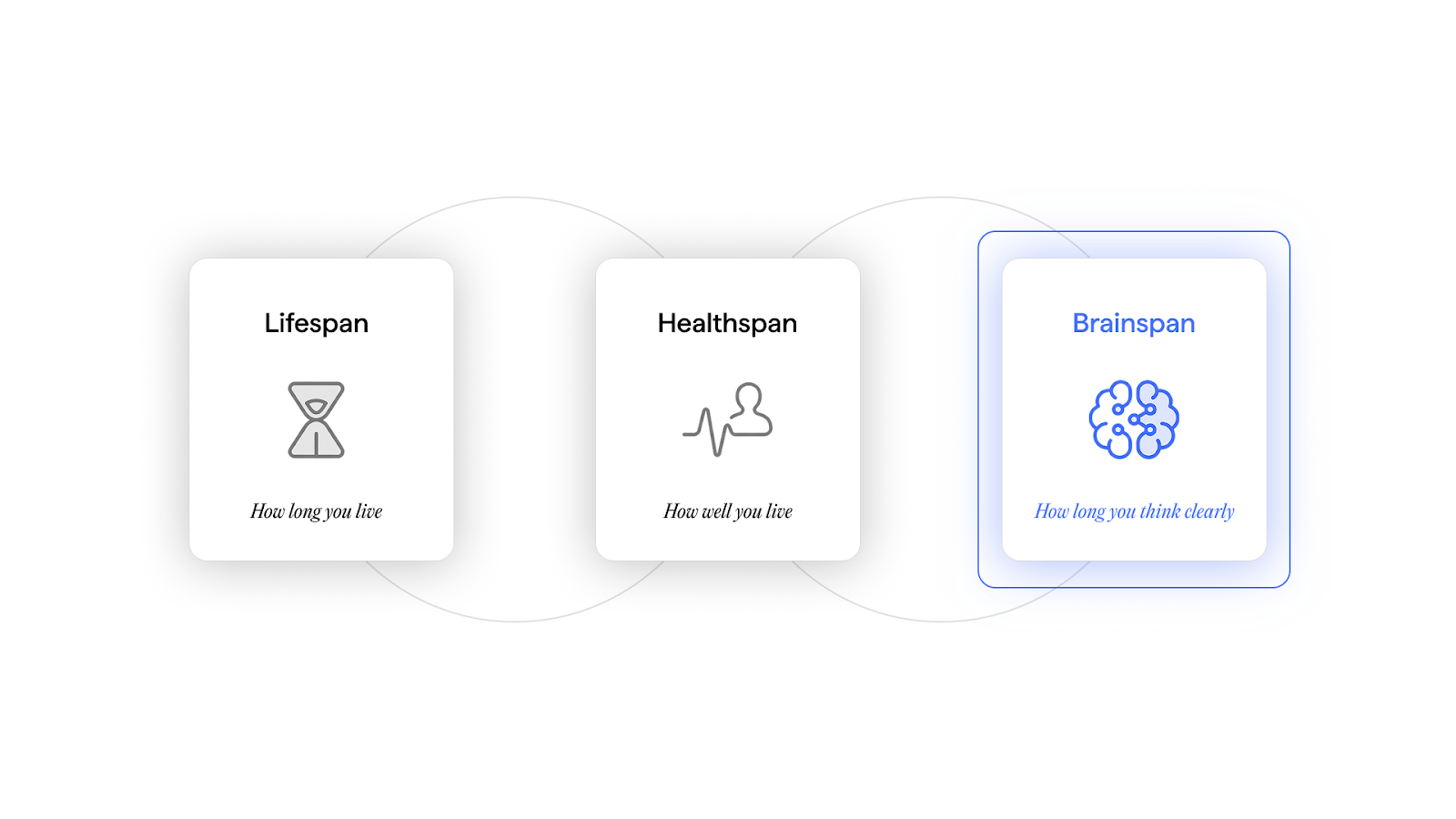
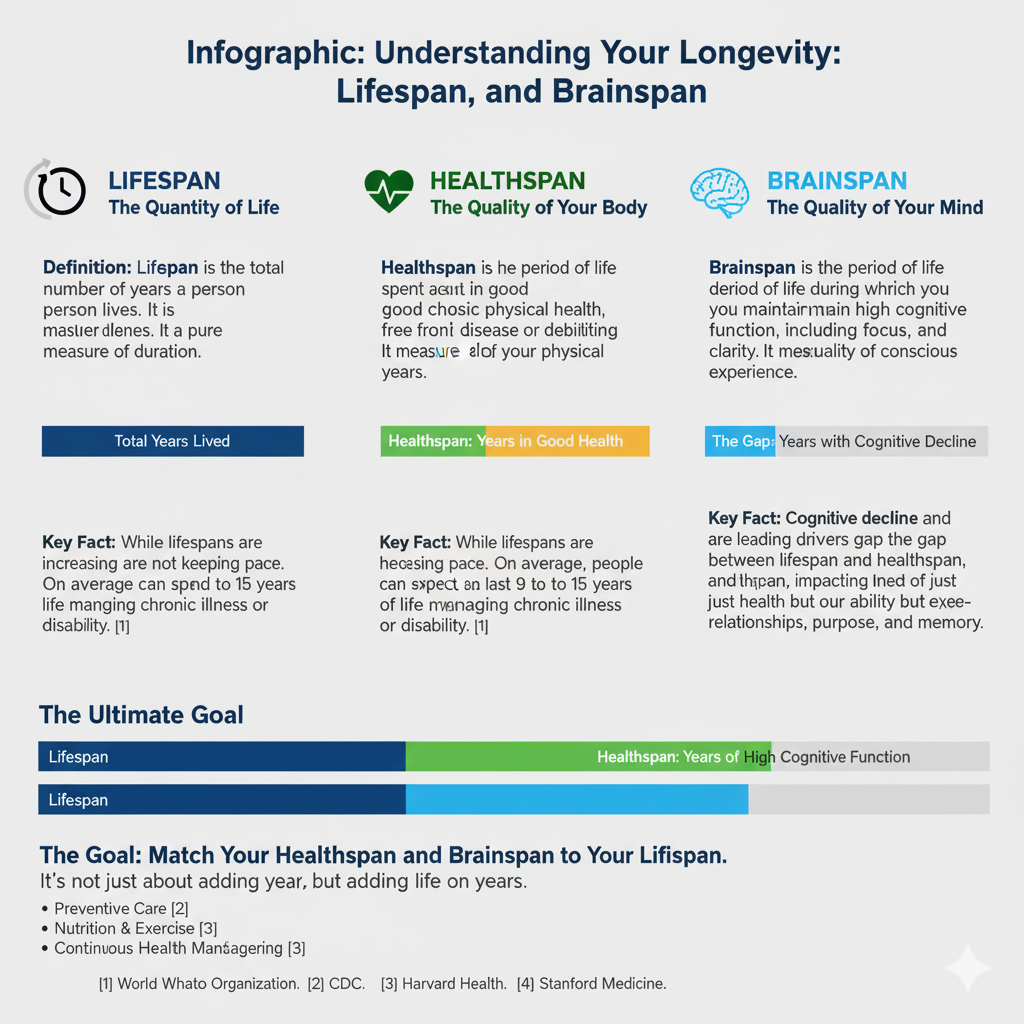
Lifespan is how long you live. Healthspan is how long you live well. Brainspan is how long you think clearly, and it's the metric that matters most.
For the last century, advancements in medical science and public health have gifted humanity with a remarkable achievement: an unprecedented increase in the global human lifespan. This success has brought a new conversation into focus, shifting the debate from merely how long we live to how well we live. This dialogue has been largely defined by two key concepts: longevity and healthspan.
But as we stand on the precipice of a new health revolution, it is time to introduce a third, more critical metric. A metric that defines not just the quality of our physical existence, but the quality of our conscious experience. At Neurable, we call this metric brainspan, and we believe it will define the future of human health.
From Lifespan to Healthspan: A Necessary Evolution
To understand the importance of brainspan, we must first clearly define the terms that have shaped the conversation on aging until now.
- Longevity and Lifespan: These terms, often used interchangeably, refer to the total number of years a person lives. It is a simple, quantitative measure of duration. Life expectancy is the statistical average of this duration for a population. For decades, increasing this number has been the primary goal of medicine.
- Healthspan: This is a more nuanced concept that has gained significant attention in recent scientific and public discourse. Healthspan is defined as the period of life lived free from chronic disease or disability. It is not about the years in your life, but the life in your years. The sobering reality is that for many, lifespan significantly outstrips healthspan. In the United States, the average person can expect to live about 15 years in poor health, burdened by chronic conditions that diminish quality of life and increase healthcare costs. This disparity is known as the lifespan healthspan gap, and closing it has rightly become a global priority.
The Final Frontier: Why Brainspan Changes Everything
The focus on healthspan is a crucial step forward, but it remains incomplete. It often prioritizes physical vitality while overlooking the organ that governs our entire existence: the brain. This brings us to the most important metric for a life well lived.
- Brainspan: This is the period of your life that you maintain high cognitive function, free from debilitating cognitive impairment. It is the measure of how long your brain stays healthy, agile, and resilient.
What is the purpose of a long life if our brain cannot enjoy it? Physical health is of little value without the cognitive capacity to experience relationships, purpose, and memory. Dementia is one of the leading drivers of the healthspan lifespan gap, with global cases expected to nearly triple to 152 million by 2050. This makes the preservation of cognitive function the single most important challenge in the science of longevity. The ultimate goal is not just to live long or even to live healthy, but to ensure our brainspan equals our lifespan.
The Challenge of Measuring Brainspan
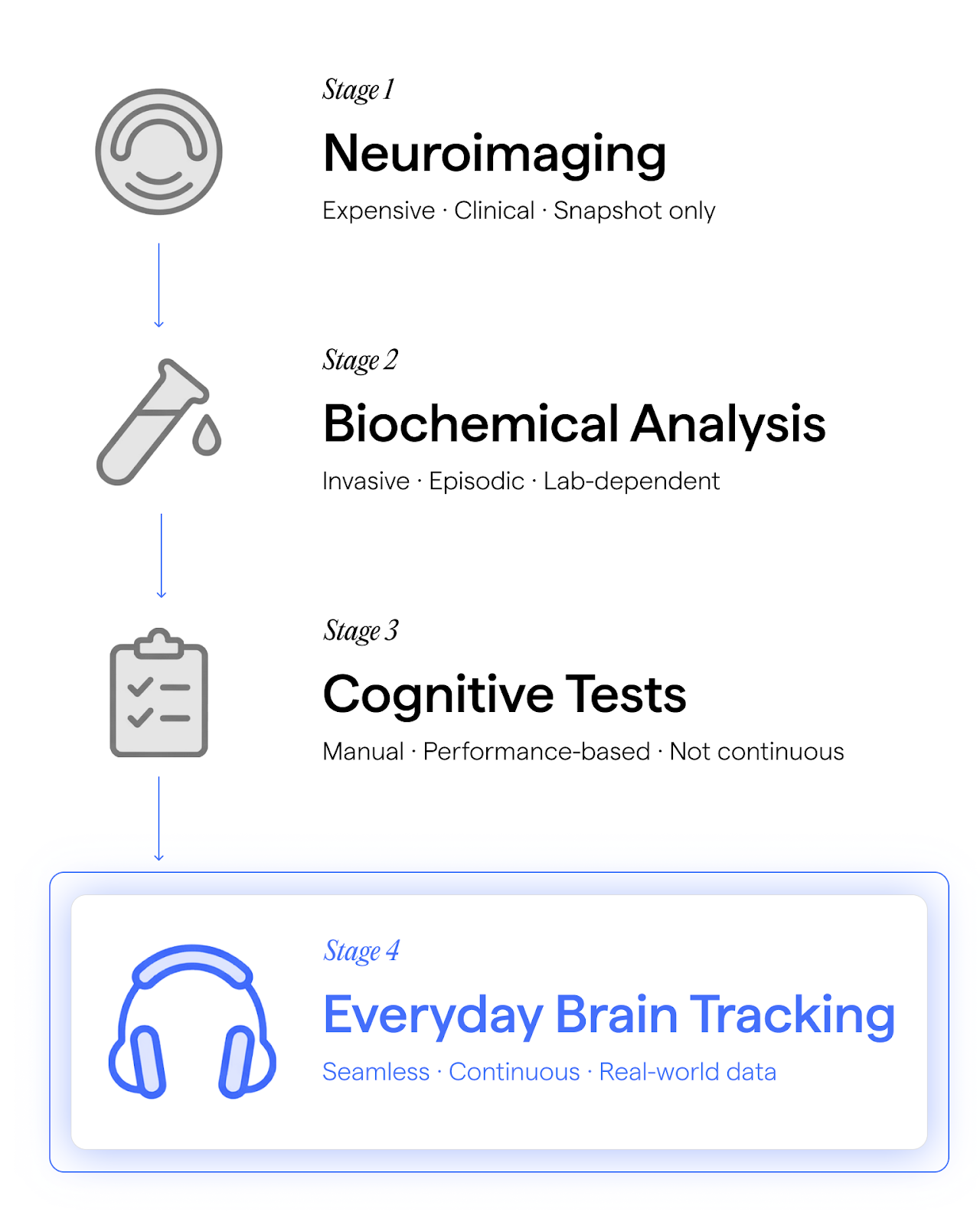
Until now, measuring brainspan has been confined to clinical settings and research laboratories. Traditional methods for assessing brain health include:
- Neuroimaging: Techniques like Magnetic Resonance Imaging (MRI) and Positron Emission Tomography (PET) and Electroencephalography EEG scans can provide detailed information about brain structure, electrical patterns and identify biomarkers of disease, such as the amyloid plaques and tau tangles associated with Alzheimer's disease. However, these methods are expensive, inaccessible for routine monitoring, and provide only a momentary snapshot of brain health.
- Biochemical Analysis: Examining cerebrospinal fluid or, more recently, blood tests can detect biomarkers for neurodegenerative diseases. While promising for early detection, these are still episodic measurements rather than a continuous assessment of functional brain health.
- Cognitive Assessments: Computerized tests can assess functions like memory, processing speed, and attention. These are valuable but measure performance, not the underlying biological state of the brain itself.
The fundamental limitation of these methods is that they are not scalable or suitable for longitudinal tracking in everyday life. To truly understand and optimize brainspan, we need to move from episodic snapshots to continuous insight.
The Solution: A New Era of Brain Health Tracking
We are now at a technological inflection point that makes measuring and optimizing brainspan possible for everyone. The convergence of miniaturized biosensors, artificial intelligence, and wearable technology allows us to track brain health continuously and non invasively. This new paradigm is built on the ability to measure objective, biological markers of brain function in real world environments.
At Neurable, we’ve spent over a decade building the technology to make high performance brain tracking seamless, wearable, and scalable we call a thinkable. Our patented AI and signal processing innovations, built on data from thousands of users and validated by partners like the U.S. Air Force enables research grade electroencephalography (EEG) to work in everyday devices like headphones.
This allows us to introduce a powerful new biomarker for brain health: Cognitive Age.
How to Extend Your Brainspan: The Daily Habits That Matter
The good news is that cognitive age is not fixed. "If you measure it, you can change it." Extending your brainspan is possible by adopting daily habits that are scientifically proven to support brain health.
- Nutrition: Your brain is nearly 60% fat, and Omega 3 fatty acids like DHA are critical structural components. Diets rich in these healthy fats, found in fish and nuts, are associated with improved memory and a lower risk of cognitive decline. Limiting processed foods and refined sugars also helps reduce inflammation, which can damage brain cells.
- Exercise: Regular physical activity, including both cardio and strength training, is one of the most effective ways to protect your brain. Exercise boosts blood flow, supports the growth of new neurons, and reduces the risk of chronic diseases that can impair cognitive function.
- Sleep: Sleep is your brain's essential maintenance period. During deep sleep, the brain clears out toxins and consolidates memories. Prioritizing 7–8 hours of quality sleep per night is crucial for maintaining cognitive performance and preventing burnout.
- Stress Management: Chronic stress can shrink key brain areas like the hippocampus, which is vital for memory. Incorporating mindfulness, meditation, or simply taking regular "brain breaks" during the day can lower stress hormones and protect your brain from long term damage.
- Cognitive Fitness: Just like your body, your brain benefits from a workout. Engaging in socially and intellectually stimulating activities, such as learning a new skill or spending time with friends, helps build cognitive reserve and maintain neural pathways.
How to Track and Improve Your Brain Age Over Time
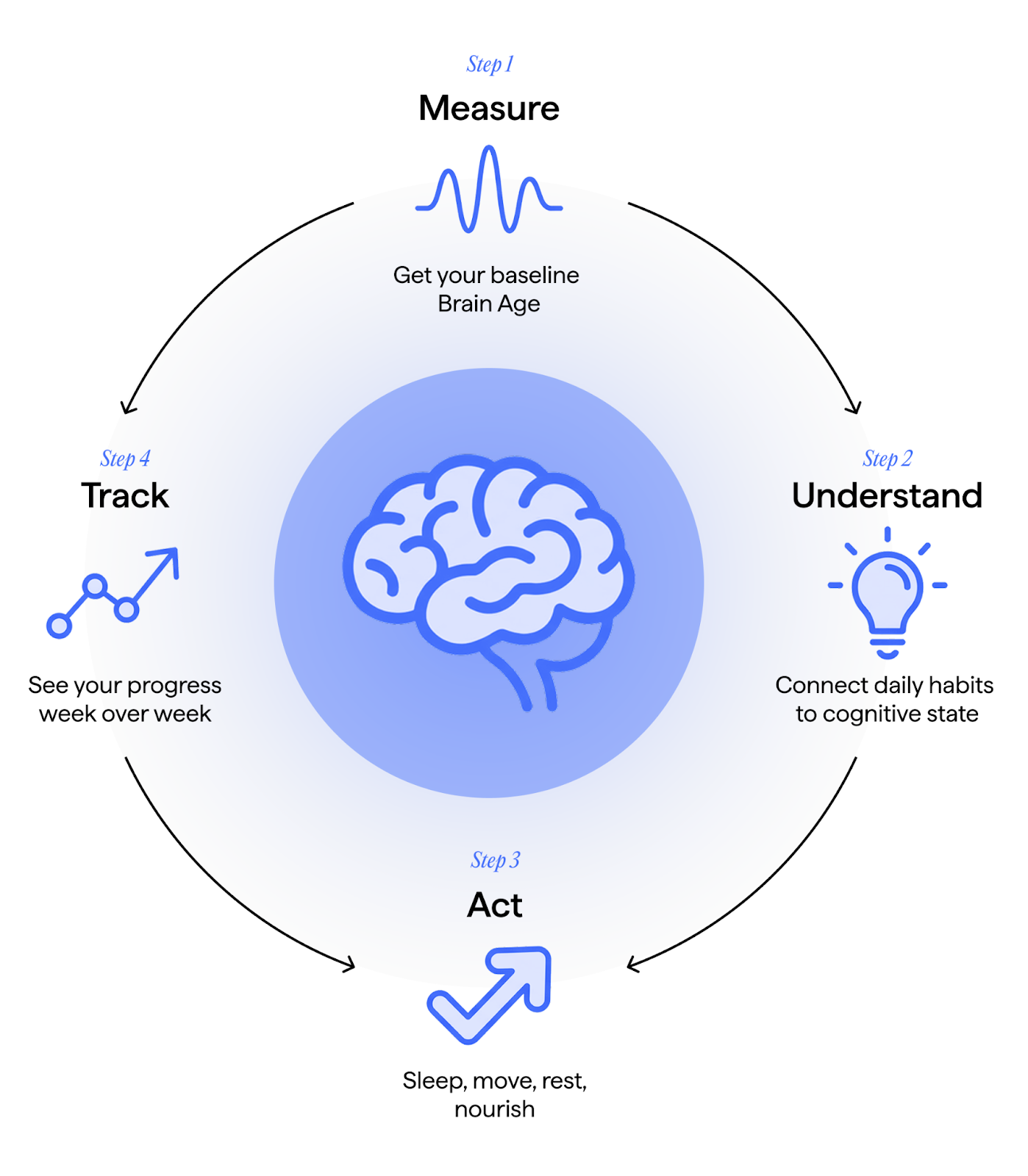
The ability to track your cognitive age creates a powerful feedback loop for improvement.
- Measure: Using a device like the MW75 Neuro, you can get a baseline Cognitive Age and a detailed picture of your brain's performance across key metrics like focus, calmness, and processing speed.
- Understand: The Neurable app provides real time insights that connect your daily actions to your cognitive state. You can see how a poor night's sleep impacts your focus the next day or how a 10 minute walk can reset your mental energy.
- Act: Armed with this data, you can implement the healthy habits listed above and see their direct effect. This data driven approach transforms abstract wellness advice into a personalized action plan.
- Track: By monitoring your Cognitive Age over weeks and months, you can see tangible proof of your progress. This creates a virtuous cycle of motivation and improvement.
The most profound benefit of everyday tracking is the establishment of a longitudinal baseline for each individual. By understanding your brain’s normal functioning over weeks and months, you can detect subtle deviations that may signify the onset of illness, often before physical symptoms manifest.
We are already seeing incredible success stories from those using our technology. Here’s what users have shared so far:
In reference to the Mental Recovery Score: "I view it as preparation for the day... It gives you some coordinates to plan your day."
One user noted, "The breaks definitely allow me to get back into a focused state more easily... I felt more relaxed and calm during my normal work day."
Another shared, "Before these headphones I was beholden to the whims of my energy levels and mood. I can finally understand more about how my mind works."
These are real examples of people using their own brain data to effectively reverse their cognitive aging and improve their daily lives.
The future of health is wearable. And for the first time, it includes the most important organ of all. The era of brainspan has begun.
2 Distraction Stroop Tasks experiment: The Stroop Effect (also known as cognitive interference) is a psychological phenomenon describing the difficulty people have naming a color when it's used to spell the name of a different color. During each trial of this experiment, we flashed the words “Red” or “Yellow” on a screen. Participants were asked to respond to the color of the words and ignore their meaning by pressing four keys on the keyboard –– “D”, “F”, “J”, and “K,” -- which were mapped to “Red,” “Green,” “Blue,” and “Yellow” colors, respectively. Trials in the Stroop task were categorized into congruent, when the text content matched the text color (e.g. Red), and incongruent, when the text content did not match the text color (e.g., Red). The incongruent case was counter-intuitive and more difficult. We expected to see lower accuracy, higher response times, and a drop in Alpha band power in incongruent trials. To mimic the chaotic distraction environment of in-person office life, we added an additional layer of complexity by floating the words on different visual backgrounds (a calm river, a roller coaster, a calm beach, and a busy marketplace). Both the behavioral and neural data we collected showed consistently different results in incongruent tasks, such as longer reaction times and lower Alpha waves, particularly when the words appeared on top of the marketplace background, the most distracting scene.
Interruption by Notification: It’s widely known that push notifications decrease focus level. In our three Interruption by Notification experiments, participants performed the Stroop Tasks, above, with and without push notifications, which consisted of a sound played at random time followed by a prompt to complete an activity. Our behavioral analysis and focus metrics showed that, on average, participants presented slower reaction times and were less accurate during blocks of time with distractions compared to those without them.